As global temperatures continue to fluctuate, the travel world is witnessing a major pivot: the “Coolcation.” In the summer of 2026, travelers are increasingly swapping the overcrowded, sweltering Mediterranean for the crystalline silence of the High Arctic. However, navigating the top of the world is no simple feat. To experience the Arctic safely and luxuriously, the “all-inclusive” expedition model has evolved from a convenience into a necessity.
From hybrid-electric icebreakers to door-to-door logistics, here is everything you need to know about planning your Arctic odyssey for 2026.
1. The Rise of Hybrid-Electric Luxury
In 2026, the Arctic cruise industry is undergoing a green revolution. New environmental mandates mean that many heritage fjords are now protected from heavy-fuel vessels. The result? A new fleet of ultra-quiet, hybrid-electric ships that offer a “silent cruise” experience.
- Ponant’s Le Commandant Charcot: This is the gold standard for 2026. As a PC2-rated icebreaker powered by LNG and electric batteries, it can reach the Geographic North Pole with minimal environmental impact.
- The Silent Advantage: For travelers, the benefit of hybrid technology is twofold: it reduces the carbon footprint and allows the ship to approach wildlife, like bowhead whales or polar bears on pack ice, without the disruptive roar of a traditional engine.
2. What “All-Inclusive” Means in 2026
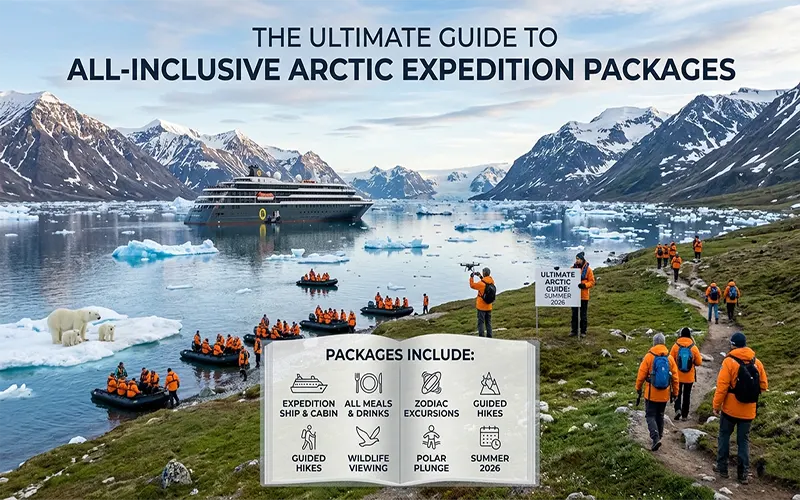
In the High Arctic, an “all-inclusive” package isn’t just about open bars and fine dining. It is about all-inclusive adventure. A premium 2026 package typically includes:
- Charter Flights & Transfers: Many expeditions now bundle private charter flights from hubs like Oslo, Reykjavik, or Ottawa directly to embarkation points like Longyearbyen or Kangerlussuaq.
- Expedition Gear: You no longer need to buy a $1,000 parka. Top-tier operators provide complimentary polar-grade parkas (often yours to keep) and waterproof Muck boots for the duration of the trip.
- Professional Photography: Most 2026 luxury packages include an onboard professional photographer who not only captures your journey but also runs workshops to help you photograph the Northern Lights or moving wildlife.
- Shore Excursions: Every Zodiac landing, tundra hike, and sea kayaking session is included in the base price, ensuring there are no hidden “activity fees” once you’re on the ice.
3. Key Destinations for Summer 2026
The summer window (May to September) offers distinct experiences depending on which part of the Arctic you choose:
- Svalbard (The Wildlife Hub): Best in May and June. This is the prime season for polar bear sightings as they hunt on the retreating sea ice. Packages usually range from 8 to 12 days, focusing on the Spitsbergen archipelago.
- Greenland’s Scoresby Sound (The Scenery Hub): Best in August and September. Scoresby Sound is the world’s largest fjord system. Late summer offers the best chance to see the massive icebergs of Ilulissat without the interference of heavy winter pack ice.
- The Northwest Passage (The Holy Grail): A 16-to-24-day journey that remains the ultimate bucket-list item. These expeditions cross from Greenland to Alaska, following the footsteps of Franklin and Amundsen.
4. Citizen Science: Travel with Purpose
One of the most significant trends for 2026 is the integration of Citizen Science. Modern travelers want to be more than just spectators; they want to be participants in conservation.
Many all-inclusive packages now feature onboard laboratories where guests can assist marine biologists in tracking whale migrations, analyzing microplastics in the water, or monitoring glacier recession. These programs, often endorsed by organizations like the UN Decade of Ocean Science, turn a luxury holiday into a meaningful contribution to polar research.
5. 2026 Pricing and Logistics
Arctic travel remains a significant investment. In 2026, prices for an all-inclusive expedition typically start at:
- Svalbard Expeditions: $8,000 – $14,000 per person.
- Greenland/Iceland Combinations: $12,000 – $18,000 per person.
- North Pole / Northwest Passage: $25,000 – $45,000+ per person.
While these figures are high, the “all-inclusive” model protects you from the astronomical costs of last-minute logistics in the Far North—where a single missed flight or an extra night in a remote village can cost thousands.
The Arctic in 2026 is a frontier that is more accessible than ever, yet more fragile than ever. By choosing an all-inclusive expedition that utilizes hybrid technology and supports citizen science, you aren’t just seeing the ice—you’re helping to understand and protect it. Whether you are kayaking past a sapphire-blue iceberg or standing at 90° North, the Arctic summer of 2026 promises a silence and a scale that stays with you for a lifetime.