Sustainable Wildlife Conservation Volunteer Travel Packages in Africa (2026 Edition)
In 2026, the era of “voluntourism”—characterized by high-gloss selfies and hands-on interaction with captive predators—is effectively over. The modern traveler has evolved into a Citizen Scientist, seeking programs where their presence is a mechanical necessity for conservation rather than a marketing byproduct.
Sustainable wildlife volunteering in 2026 is defined by “Impact over Optics.” It is repetitive, scientifically rigorous, and centered on the principle that the best interaction with a wild animal is no interaction at all.
1. The 2026 “Gold Standard” of Volunteering
True sustainability in 2026 is measured by three non-negotiable pillars:
- The No-Contact Rule: Ethical programs, such as those led by Wildlife ACT, strictly prohibit petting, bottle-feeding, or “walking with” big cats. These practices render animals unfit for the wild and are a hallmark of exploitative “cub-petting” industries.
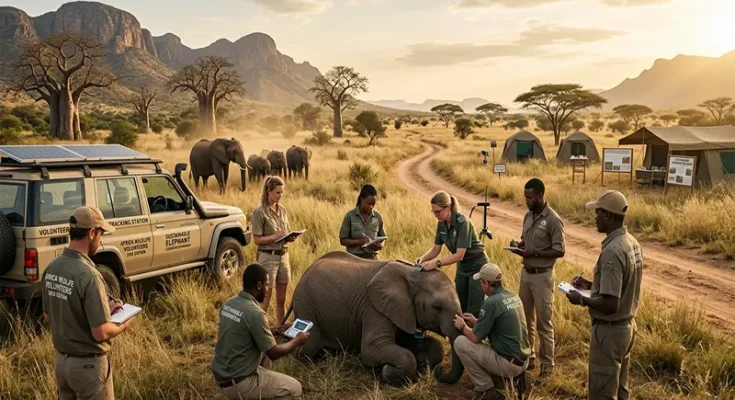
- Science-Led Objectives: Your role is to assist professional field teams in data collection. This includes telemetry tracking, camera