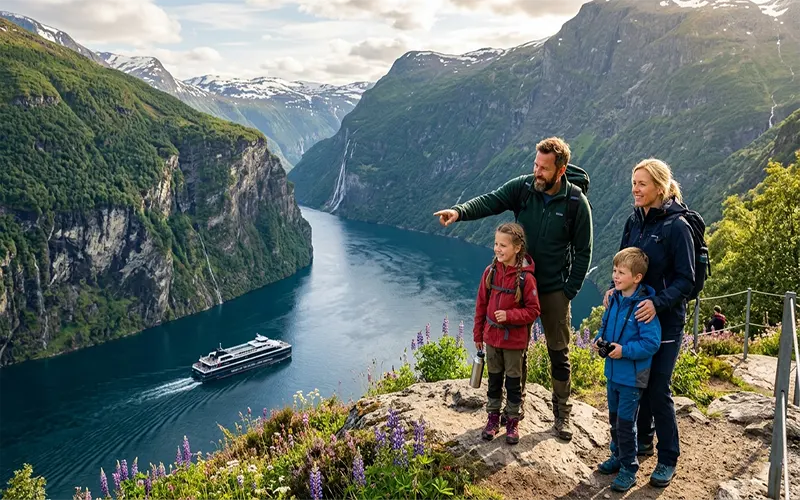
As the midnight sun hangs low over the horizon, casting a persistent, golden-hour glow that lasts well past bedtime, the air in the Norwegian fjords feels different. It is crisp, smelling faintly of salt and pine, but more importantly, it is quiet. In 2026, a new era of travel has arrived in these UNESCO-listed waters. With the implementation of strict zero-emission regulations for passenger ships and ferries in the heritage fjords, the roaring engines of the past have been replaced by the silent hum of electric propulsion. For families seeking a summer holiday that balances high-octane adventure with a minimal carbon footprint, there is no better playground on Earth.
The New “Green Route” Logistics
Planning a sustainable family trip once felt like a series of compromises; in Norway, it feels like a series of upgrades. The transition to green travel is most visible on the water. The iconic Nærøyfjord and Geirangerfjord are now exclusively the domain of electric and hybrid vessels. Gliding through the water on a battery-powered ferry like the Future of the Fjords is a transformative experience for children. Without the vibration and noise of a diesel engine, you can hear the distant rush of waterfalls and the occasional splash of a porpoise.
On land, the “Norway in a Nutshell” route remains the gold standard for low-impact transport. Families can seamlessly transition from the Flåm Railway—one of the world’s steepest and most beautiful electric train journeys—to electric buses that navigate the hairpin turns of the mountains with ease. For those who prefer the independence of a road trip, Norway’s electric vehicle (EV) infrastructure is the densest in the world, making an electric car rental a stress-free way to reach remote trailheads.
Adventures in Slow Motion
In the fjords, sustainability is synonymous with “slow travel”—the idea of staying longer in one place and engaging deeply with the environment.
- Paddling through History: Sea kayaking in the Nærøyfjord allows families to see the landscape from the water level. Guided eco-tours focus on the geology of the steep cliff faces and the history of the tiny, roadless hamlets clinging to the mountainsides. It’s a physical challenge that rewards children with a sense of immense scale.
- Glacier and Gorge: Near the Jostedalsbreen glacier, families can join guided “Blue Ice” hikes. These tours emphasize climate education, showing firsthand how the glaciers have shaped the land and how they are changing today. For older kids, white-water rafting on the glacier-fed Jostedal River provides a surge of adrenaline powered entirely by gravity and meltwater.
- The Viking Connection: A visit to the Njardarheimr Viking Valley in Gudvangen offers a cultural perspective on sustainability. Here, “living history” isn’t just a show; it’s an exploration of how the Norse lived in harmony with these rugged landscapes for centuries, using local materials and traditional crafts that are being revived today.
Friluftsliv: The Right to Roam
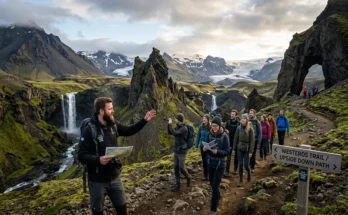
Central to the Norwegian identity is the concept of friluftsliv, or “open-air life.” This isn’t just a hobby; it’s a philosophy supported by Allemannsretten—the traditional “Right to Roam.” For a family, this means you are legally allowed to hike and camp almost anywhere in the countryside, provided you stay 150 meters from inhabited houses and leave no trace.
Sustainable hiking in Norway is made easy by the DNT (Norwegian Trekking Association) network. Their kid-friendly trails are marked with a red “T,” leading to self-service cabins that are often powered by solar panels and stocked with local provisions. Teaching children to pack out what they pack in and to respect the delicate mountain flora is a lesson in environmental stewardship that stays with them far longer than a souvenir.
Eco-Conscious Stays and Fjord-to-Table Dining
The infrastructure for sustainable hospitality has expanded rapidly. Families are moving away from massive hotels in favor of boutique eco-lodges and “glamping” sites that prioritize integration with nature.
- Boutique Cabins: Many new developments feature “birdbox” style cabins—minimalist, high-design structures perched on hillsides that offer 360-degree views without the need for massive land excavation.
- Organic Farmstays: In regions like Hardanger, staying at an organic fruit farm allows children to pick their own berries and learn about the “Fjord-to-Table” movement. Dining here is a lesson in seasonality; lunch might be local cider (non-alcoholic for the kids), sourdough bread from a communal oven, and freshly caught trout.
Pro-Tips for the Sustainable Family Traveler
- Pack for Four Seasons: To avoid the need for buying “emergency” plastic ponchos or extra layers, pack high-quality wool base layers and waterproofs. The weather in the fjords can change in minutes.
- Download the Apps: Use the Skyss or Entur apps to coordinate all public transport in one place. They prioritize the greenest routes.
- Drink the Water: Norway’s tap water is some of the purest in the world. Carry reusable bottles for everyone in the family to eliminate the need for single-use plastics.
A Legacy in the Making
Traveling sustainably in the Norway fjords is more than just a vacation choice; it is an investment in the future of these very landscapes. By choosing electric transport, staying in eco-certified accommodations, and practicing friluftsliv, families contribute to a tourism model that preserves the emerald waters and snow-capped peaks for the next generation. As you stand on the deck of a silent ferry, watching the mist swirl around a 1,000-foot cliff, the message is clear: the most adventurous way to see the world is also the kindest.