How to Start a Luxury Boutique Travel Agency from Home

How to Start a Luxury Boutique Travel Agency from Home

The luxury travel landscape of 2026 has shifted from the pursuit of “gold-plated” opulence to the curation of frictionless, meaningful, and regenerative experiences. For the home-based entrepreneur, this is a golden era. You no longer need a high-street storefront to signal prestige; instead, your value lies in your specialized knowledge, your tech-enabled efficiency, and your ability to design “invisible” luxury.

Here is the blueprint for launching a high-end boutique agency from your home office.

1. Carving Your High-Net-Worth Niche

In the luxury sector, “generalist” is a dirty word. High-Net-Worth (HNW) clients seek experts who understand their specific lifestyle constraints. To stand out, you must move into a micro-niche where you can offer deep authority.

  • Regenerative Luxury: Move beyond “eco-friendly” to “regenerative.” This involves curating stays at properties that actively restore the local ecosystem or community. Think of a 5-star lodge in the Serengeti that funds local reforestation and wildlife
How to Start a Luxury Boutique Travel Agency from Home READ MORE
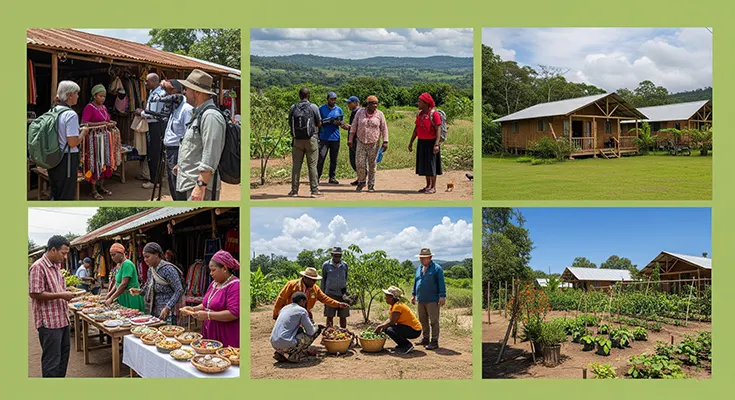
Developing Ethical and Responsible Tourism Business Models for Emerging Markets

Developing Ethical and Responsible Tourism Business Models for Emerging Markets

In today’s globalized world, the tourism industry plays a vital role in economic development, cultural exchange, and environmental conservation. However, the rapid growth of tourism in emerging markets has also raised concerns about issues such as overtourism, environmental degradation, and exploitation of local communities. To address these challenges, it is crucial for businesses operating in emerging markets to develop ethical and responsible tourism business models that prioritize sustainable practices and positive impacts on local stakeholders. Here are some key strategies for developing such business models:

Embracing Sustainable Practices

  1. Community Engagement: Engage with local communities and stakeholders to understand their needs, concerns, and aspirations. Collaborate with community members in the planning and decision-making processes to ensure that tourism initiatives benefit the local population and respect their cultural heritage.
  2. Environmental Conservation: Implement eco-friendly practices to minimize the carbon footprint and environmental impact of tourism operations. Reduce single-use plastics, promote energy efficiency, and
Developing Ethical and Responsible Tourism Business Models for Emerging Markets READ MORE
Thriving Amidst Change: Navigating Challenges and Seizing Opportunities in Remote Work and 'Bleisure' Travel Businesses Worldwide

Thriving Amidst Change: Navigating Challenges and Seizing Opportunities in Remote Work and ‘Bleisure’ Travel Businesses Worldwide

The landscape of work and travel has undergone a seismic shift in recent years, with remote work and ‘bleisure’ travel becoming prominent trends in the global business arena. As businesses adapt to the demands of a remote workforce and travelers seek to blend work with leisure experiences, new challenges and opportunities have emerged for companies operating in this dynamic space. In this article, we explore the hurdles to overcome and the prospects to exploit for remote work and ‘bleisure’ travel businesses on a global scale.

Challenges Facing Remote Work Businesses:

  1. Connectivity Issues: Inconsistent internet connectivity in remote locations can hamper productivity for remote workers and complicate the operations of remote work businesses.
  2. Communication Barriers: Effective communication among digital teams spread across different time zones and cultural backgrounds can present challenges that impede collaboration and workflow.
  3. Security Concerns: Safeguarding sensitive data and ensuring cybersecurity measures are in
Thriving Amidst Change: Navigating Challenges and Seizing Opportunities in Remote Work and ‘Bleisure’ Travel Businesses Worldwide READ MORE
Capturing the Gen Z Wanderlust: Strategies for Adventure Tourism Businesses to Attract International Travelers

Capturing the Gen Z Wanderlust: Strategies for Adventure Tourism Businesses to Attract International Travelers

The rise of Gen Z travelers, born between the mid-1990s and early 2000s, has transformed the landscape of the tourism industry. With a penchant for unique experiences, sustainable practices, and digital engagement, Gen Z presents a lucrative market for adventure tourism businesses seeking to attract international travelers. In this article, we delve into effective strategies that adventure tourism businesses can employ to captivate the wanderlust of Gen Z travelers and establish a strong presence in the competitive global market.

Understanding the Gen Z Mindset

To successfully attract Gen Z travelers, adventure tourism businesses must first understand the unique characteristics and preferences that define this generation:

  • Experiential Focus: Gen Z prioritizes experiences over material possessions, seeking authentic, immersive, and Instagram-worthy adventures that resonate with their desire for self-expression.
  • Tech-Savvy: Growing up in the digital age, Gen Z values seamless online experiences, personalized recommendations, and social media influence when making
Capturing the Gen Z Wanderlust: Strategies for Adventure Tourism Businesses to Attract International Travelers READ MORE
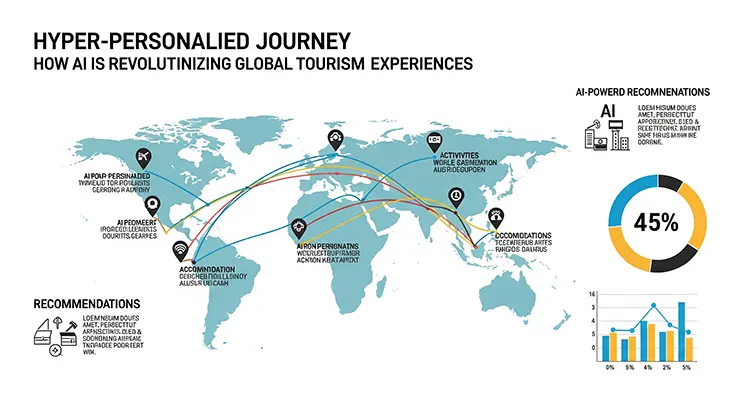
The Hyper-Personalized Journey: How AI is Revolutionizing Global Tourism Experiences

The Hyper-Personalized Journey: How AI is Revolutionizing Global Tourism Experiences

The global tourism industry is undergoing a profound transformation, driven by the relentless advancement of Artificial Intelligence (AI). Gone are the days of one-size-fits-all travel packages; AI is ushering in an era of hyper-personalized experiences, fundamentally reshaping how individuals plan, book, and enjoy their journeys. For global tourism businesses, this shift presents both immense opportunities and complex challenges.

At its core, AI’s impact on personalized travel stems from its unparalleled ability to process and analyze vast datasets. By leveraging machine learning algorithms, natural language processing (NLP), and predictive analytics, AI can understand individual preferences, past behaviors, and real-time trends to deliver highly tailored recommendations and services.

Key Impacts of AI on Personalized Travel Experiences:

  • Tailored Itinerary Creation: AI is a game-changer for trip planning. By analyzing a traveler’s interests, budget, desired activities, and even social media activity, AI-powered platforms can curate bespoke itineraries that perfectly align with their unique profile.
The Hyper-Personalized Journey: How AI is Revolutionizing Global Tourism Experiences READ MORE